7R Sustainable Waste Management Youth Exchange Project
We successfully completed our youth exchange in the field of sustainable waste management.
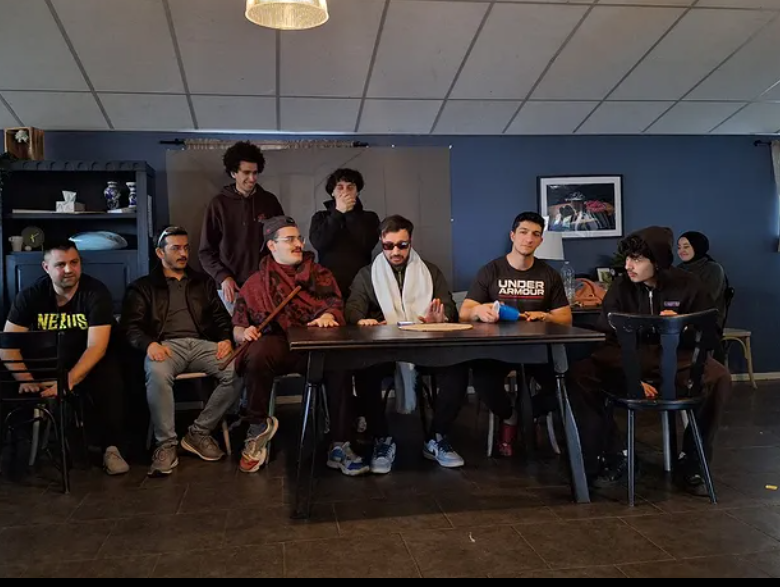
Our project was funded by the European Union and the Dutch National Agencies Erasmus+, and it was thanks to this funding that we were able to realize it.
7R Sustainable Waste Management Youth Exchange – Project Results
We successfully completed our youth exchange in the field of sustainable waste management. Throughout the project, young people not only learned the 7R approach (Rethink, Refuse, Reduce, Reuse, Repair, Recycle, Rot/Compost) theoretically, but also experienced, discussed, produced, and developed tangible outputs ready to be implemented in their own communities through applicable methods in daily life.
What was the aim of the project, and what did we achieve?
We conducted this youth exchange based on the understanding that incorrect/incomplete waste management deepens environmental degradation and the climate crisis. At the end of the project, participants succeeded in:
critically evaluating their consumption habits,
rejecting single-use and unnecessary products “at the source”,
reducing waste, making reuse and repair a daily practice,
implementing recycling and composting processes with correct methods,
initiating small-scale sustainability-focused initiatives in their own environments.
Which activities did we implement?
The program progressed with sessions based on non-formal learning, addressing the 7R principles step by step:
Rethink: Participants analyzed their consumption habits with mind maps; they concretized the environmental impacts of daily decisions through consumption-sustainability discussions and role-playing. The sessions were completed with vision boards themed “sustainable future”.
Refuse: A workshop was held to identify unnecessary/single-use products; the “should I buy it or not?” reflex was strengthened with quick decision games. Participants prepared personal “refusal action plans”.
Reduce: Mini “waste audit” was conducted to identify what could be reduced; practical solutions were developed through home/living space-focused reduction efforts and simulation games. The day concluded with creative “upcycling” productions.
Reuse: Useful product designs were created from materials considered waste; a swap event was organized, and case studies were conducted based on good examples.
Repair: The repair culture was revived with a “Repair and Share” story circle; groups produced repair guides and short content on themes such as clothing/household items/electronics; collaboration was strengthened with hands-on repair skills tasks.
Recycle: Correct classification was reinforced with sorting games; recycling plans were written at the event/community level, taking local practices into account. The works were made visible with a “Recycled Art Exhibition”.
Rot/Compost: The environmental impact of composting was researched and presented; a home-type composting workshop was conducted; The process was addressed scientifically through a compostable waste sorting competition and a simple “decomposition observation” experiment.
In the program’s finale, groups prepared and presented mini-project designs, each focusing on one of the 7Rs. Dissemination plans were then developed, and evaluation sessions were held.
Participant Profile
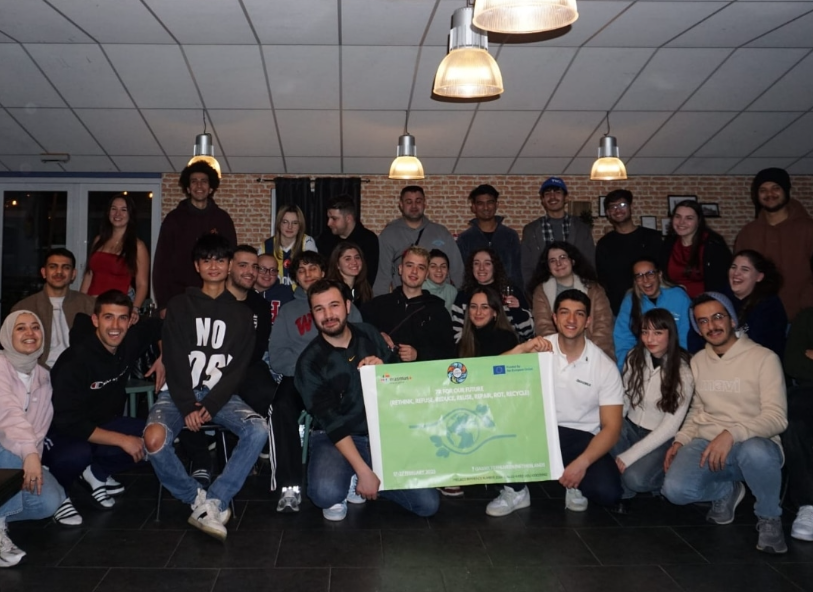
Seven people from each partner country participated in the project: six young people aged 18–30 and one group leader at least 25 years old. Additionally, each team included at least three young people experiencing social, economic, or geographical disadvantage, who took active roles in all sessions.
What were the tangible outcomes?
Main outputs obtained at the end of the project:
7R-based group mini-projects prepared by the participants (in a format applicable to the community),
Recycling plans developed at the event/institution scale,
Category-based repair guides and application content,
Upcycling products and “recycled art” works that provide visibility,
Steps to set up a composting system at home and practical “composting checklists”,
Personal action commitment and individual dissemination plan prepared by each participant.
Impact: What changed?
The impact of the project did not remain “on paper” at the end of the project; it created a visible transformation in behavior and skills:
Participants re-evaluated their consumption habits; their behaviors of rejecting unnecessary products and reducing waste were strengthened.
Practical skills such as repair, reuse, sorting, and composting were reinforced through hands-on tasks.
Young people gained the self-confidence and methodological knowledge to lead small sustainability-themed initiatives in their own environments.
Multicultural working environment; Communication, teamwork, and collaborative production skills with diverse perspectives were significantly improved.
Our institutions gained a stronger capacity for designing, coordinating, and managing environmental education projects based on non-formal learning.
Dissemination
The content produced during and at the end of the project was shared through institutional channels and social media, and made available for local dissemination through action plans prepared by the participants.
https://www.instagram.com/7r_forourfuture/